Tutorial: Creating Realistic Characters with Otakufans [Female]
7 min read
Have you ever imagined creating your own realistic female character, exactly the way you envision her? Whether you're designing an original character (OC), building a virtual influencer, creating a dream girlfriend, or simply exploring different looks and aesthetics, Otakufans gives you the creative freedom to bring your imagination to life.
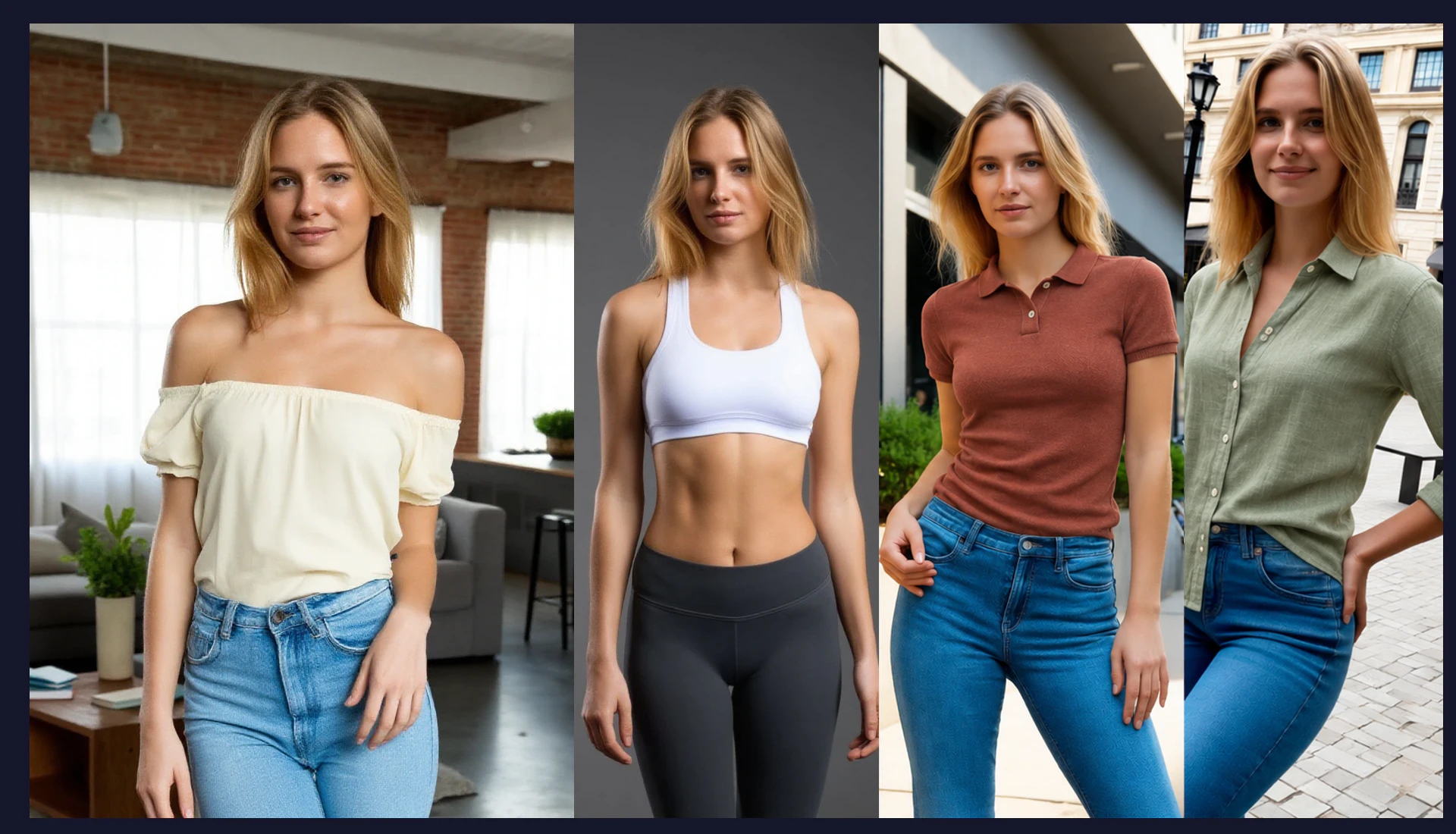
One of the most powerful aspects of Otakufans' AI image generation models is their ability to understand a wide range of character attributes and descriptive tags. From ethnicity, age, and body type to hairstyles, hair colors, and popular social media aesthetics like #cute, #model, and #fashion, these details can be combined to create realistic characters with distinctive appearances and styles.
The goal of this tutorial is to demonstrate how to efficiently design and customize a realistic female AI character using Otakufans. We'll explore the essential character attributes, explain how different tags influence the generated results, and share practical tips for creating an original character with a consistent and recognizable appearance across multiple images.
Subject
The very first step in creating a realistic original character (OC) is defining your subject.
For this tutorial, we'll focus on creating a single female character.
Unlike anime-style character generation, where a simple tag like 1girl can be enough to establish a subject, realistic character generation benefits from a little more information.
Based on our testing with Otakufans' image generation models, we recommend starting with three essential attributes: Gender, Ethnicity, and Age.
Together, these three attributes form what we call the Minimum Recommended Prompt for realistic character creation.
For example:
25-year-old white woman
That's it! With just these three attributes, you already have a starting point for generating your own realistic female character.
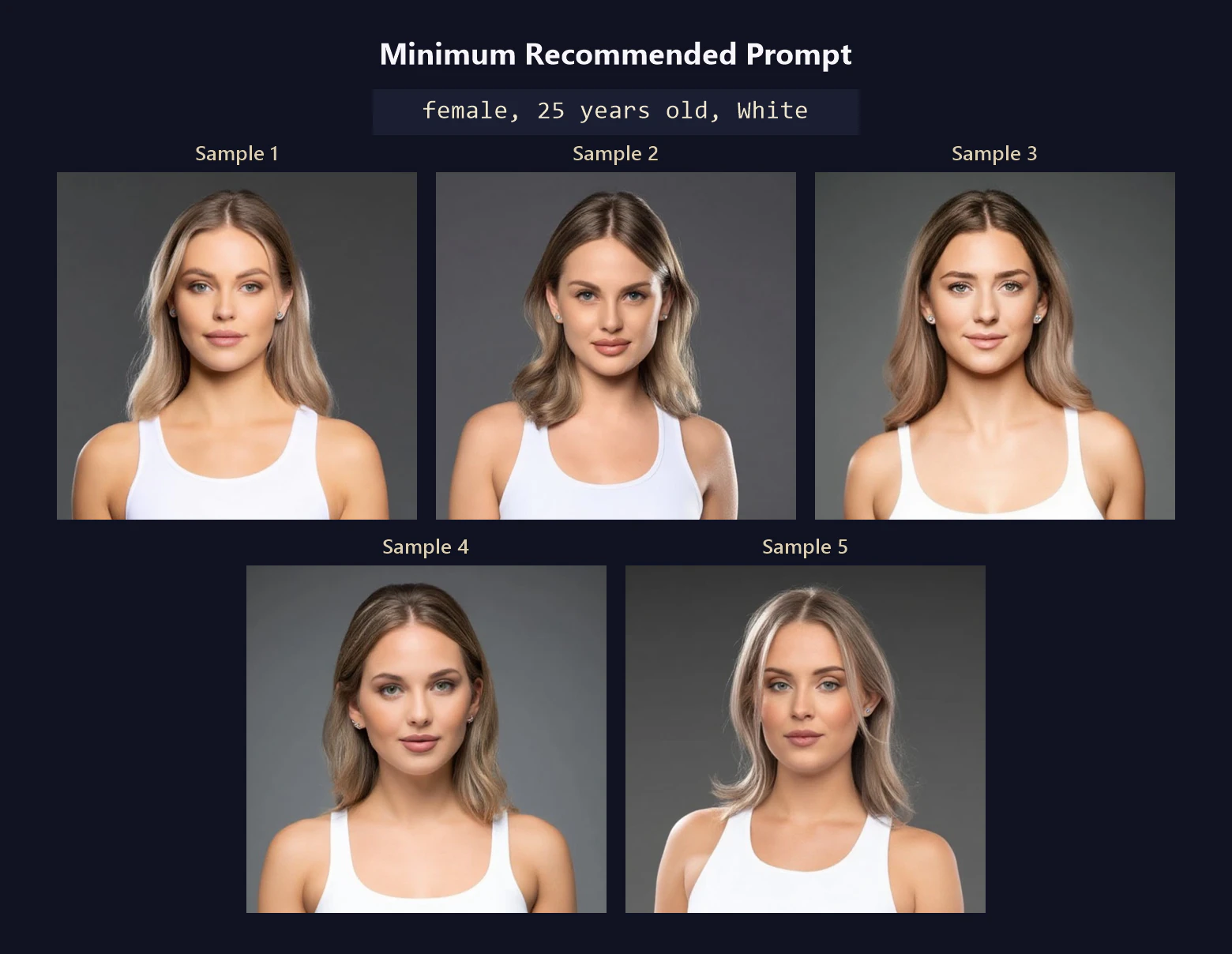
Of course, Otakufans can generate images from much simpler descriptions. However, we've found that specifying these three attributes from the beginning gives you more control over your character's initial appearance and makes it easier to achieve the look you have in mind.
Let's take a closer look at each of these attributes.
Ethnicity
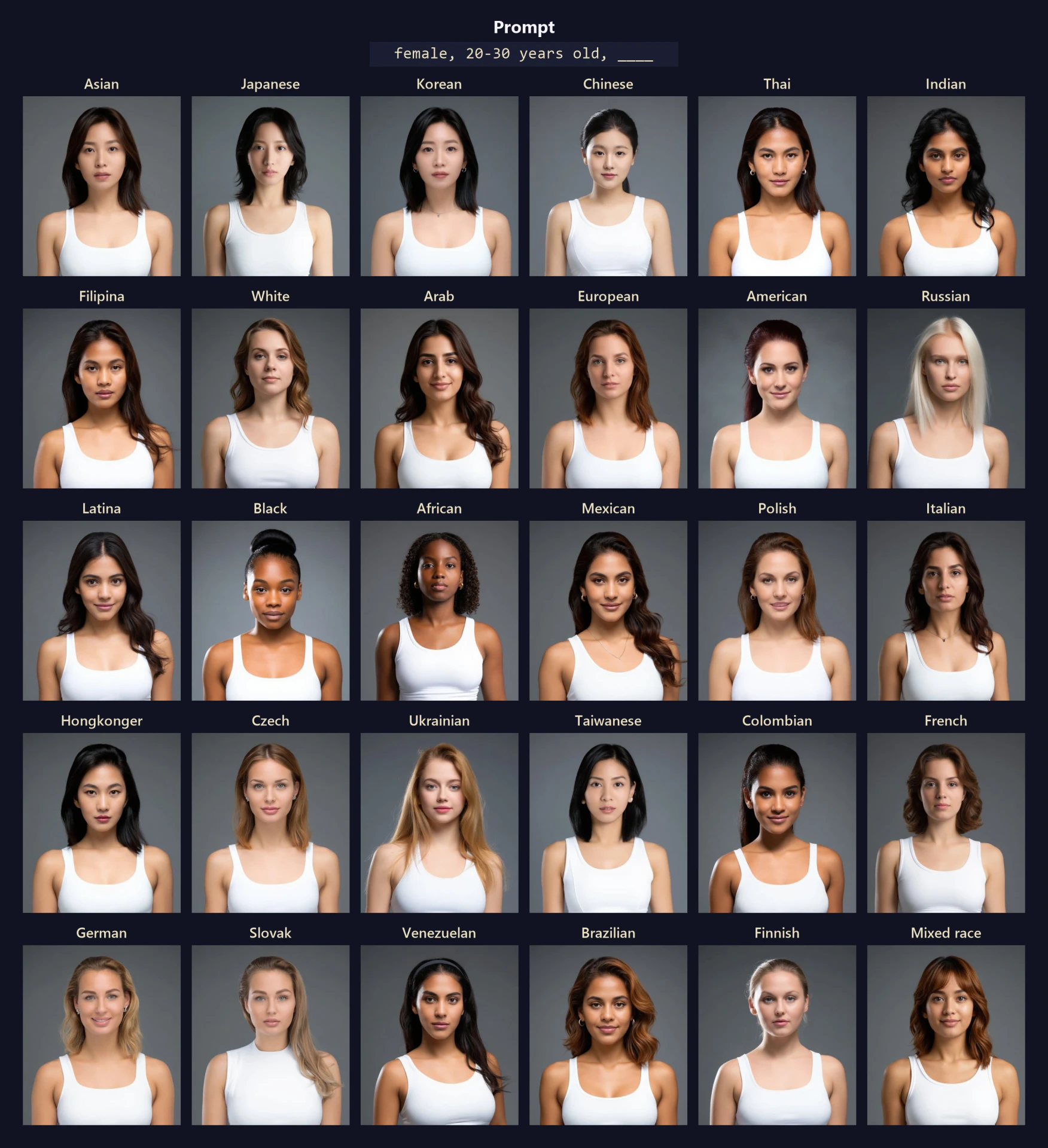
These examples show how the model responds to prompts about ethnicity, nationality, and region.
Some examples include:
Asian, Japanese, Korean, Chinese, Thai, Indian, Filipina, White, Arab, European, American, Russian, Latina, Black, African, Mexican, Polish, Italian, Hongkonger, Czech, Ukrainian, Taiwanese, Colombian, French, German, Slovak, Venezuelan, Brazilian, Finnish, and Mixed race.
For example:
American woman
You can experiment with different ethnic backgrounds to explore how they influence the appearance of your generated character. Keep in mind that individual appearances vary widely within every ethnic group.
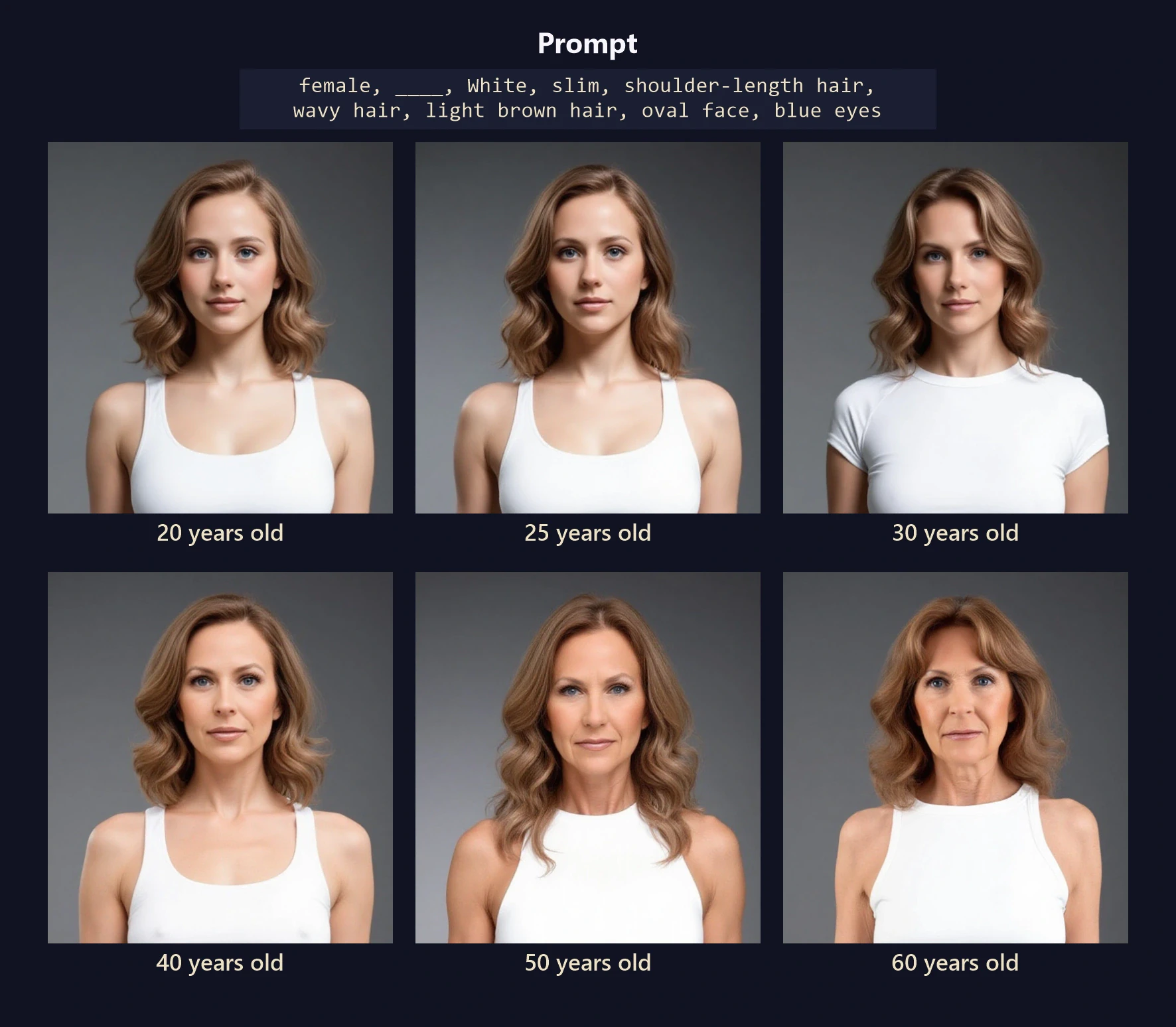
Age
Age is another essential attribute when creating realistic characters.
Specifying an age helps guide the model toward a particular stage of adult appearance.
For example:
20-year-old woman25-year-old woman30-year-old woman40-year-old woman50-year-old woman60-year-old woman
You can use an exact age or a broader description, such as woman in her 30s.
Putting the Three Attributes Together
Now that we've covered the three basic attributes, let's combine them into a single prompt:
25-year-old White woman
This is our recommended starting point for creating a realistic female OC with Otakufans.
By changing just one attribute at a time, you can explore different character appearances while keeping the rest of your prompt simple.
Body Type
Once you've defined your character's gender, ethnicity, and age, the next step is to choose her body type.
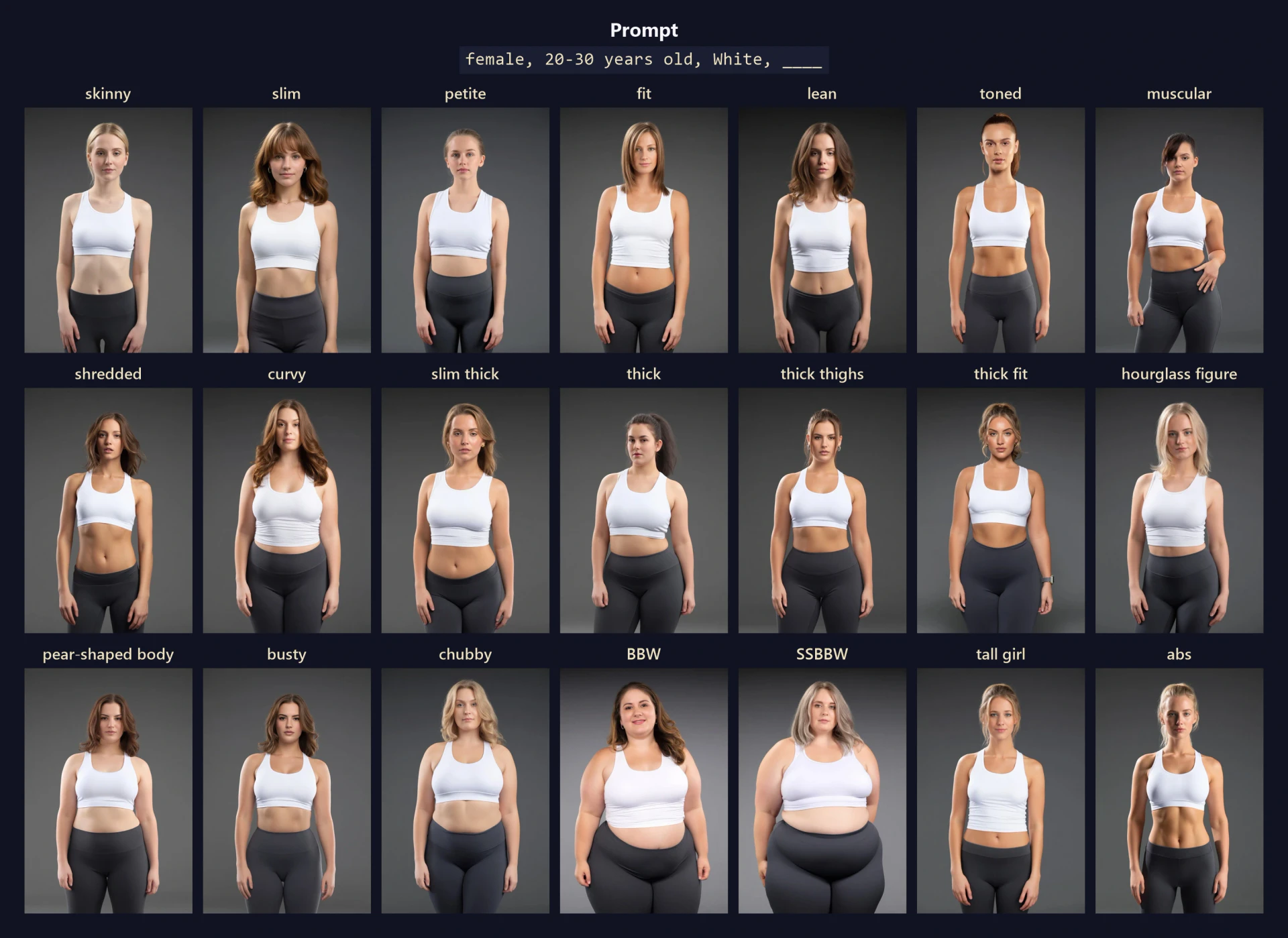
Body type is one of the most important attributes when designing a realistic female character. Even with the same age and ethnicity, changing a single body-related tag can significantly influence your character's overall appearance.
Otakufans supports a variety of body-related descriptions, from simple terms like slim and fit to more specific expressions commonly found on social media.
Some useful tags include: skinny, slim, petite, fit, lean, toned, muscular, shredded, curvy, slim thick, thick, thick thighs, thick fit, hourglass figure, pear-shaped body, busty, chubby, BBW, SSBBW, tall girl, abs
You don't need to use all of these tags at once. In fact, we recommend starting with just one.
For example:
25-year-old White woman, slim
Now try changing only the body type:
25-year-old White woman, curvy
Combining Body Type Tags
You can also combine compatible tags to describe a more specific body shape.
For example:
25-year-old White woman, slim thick, hourglass figure
Or:
25-year-old White woman, slim, toned, defined waist
We recommend starting with one primary body type and adding one or two complementary descriptors if needed.
Avoid combining contradictory descriptions such as skinny and SSBBW in the same prompt unless you're intentionally experimenting with the model.
Tip: For body type comparisons, full-body or three-quarter images usually make changes easier to observe than close-up portraits.
Once you've established your character's body type, it's time to customize her hair.
Hair
Hair is one of the easiest ways to give your realistic OC a distinctive and recognizable appearance.
A hairstyle can completely change how a character looks, even when her age, ethnicity, and body type remain the same.
We recommend breaking hair descriptions into three categories:
Hair Length
Hairstyle
Hair Color
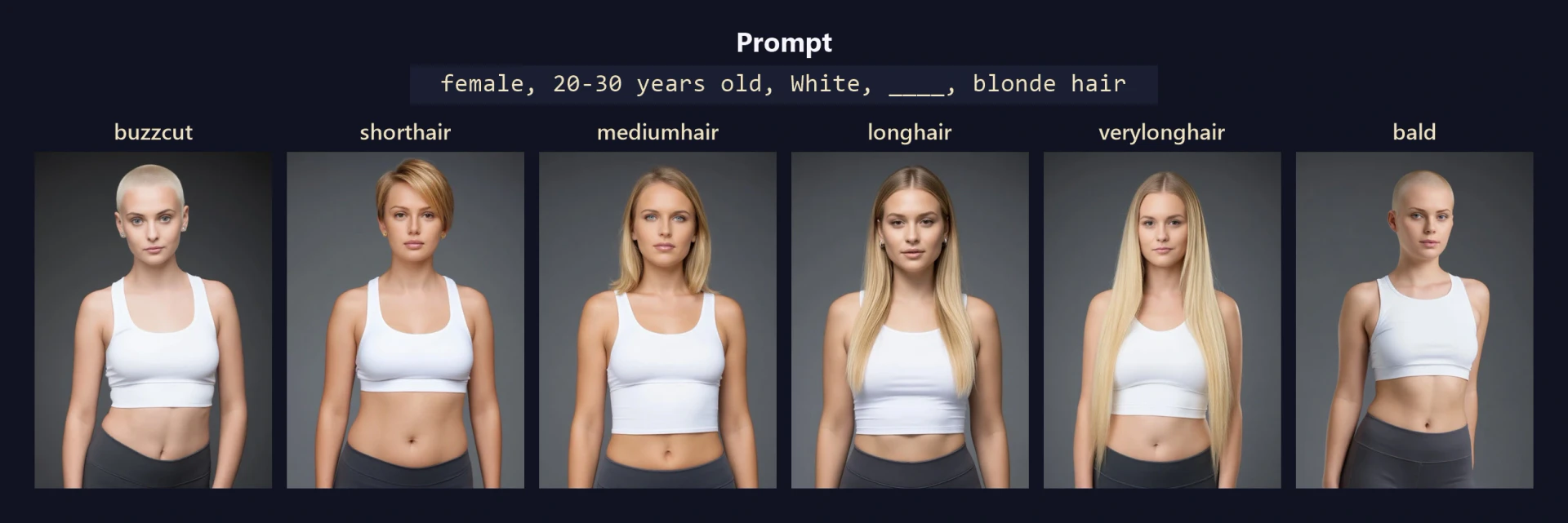
Hair Length
Start by deciding how long your character's hair should be.
Common descriptions include: pixie cut (very short haircut), short hair, bob cut (short, structured haircut), shoulder-length hair, medium-length hair (between the shoulders and upper back), long hair, waist-length hair
For example:
25-year-old White woman, slim, long hair
Hairstyle
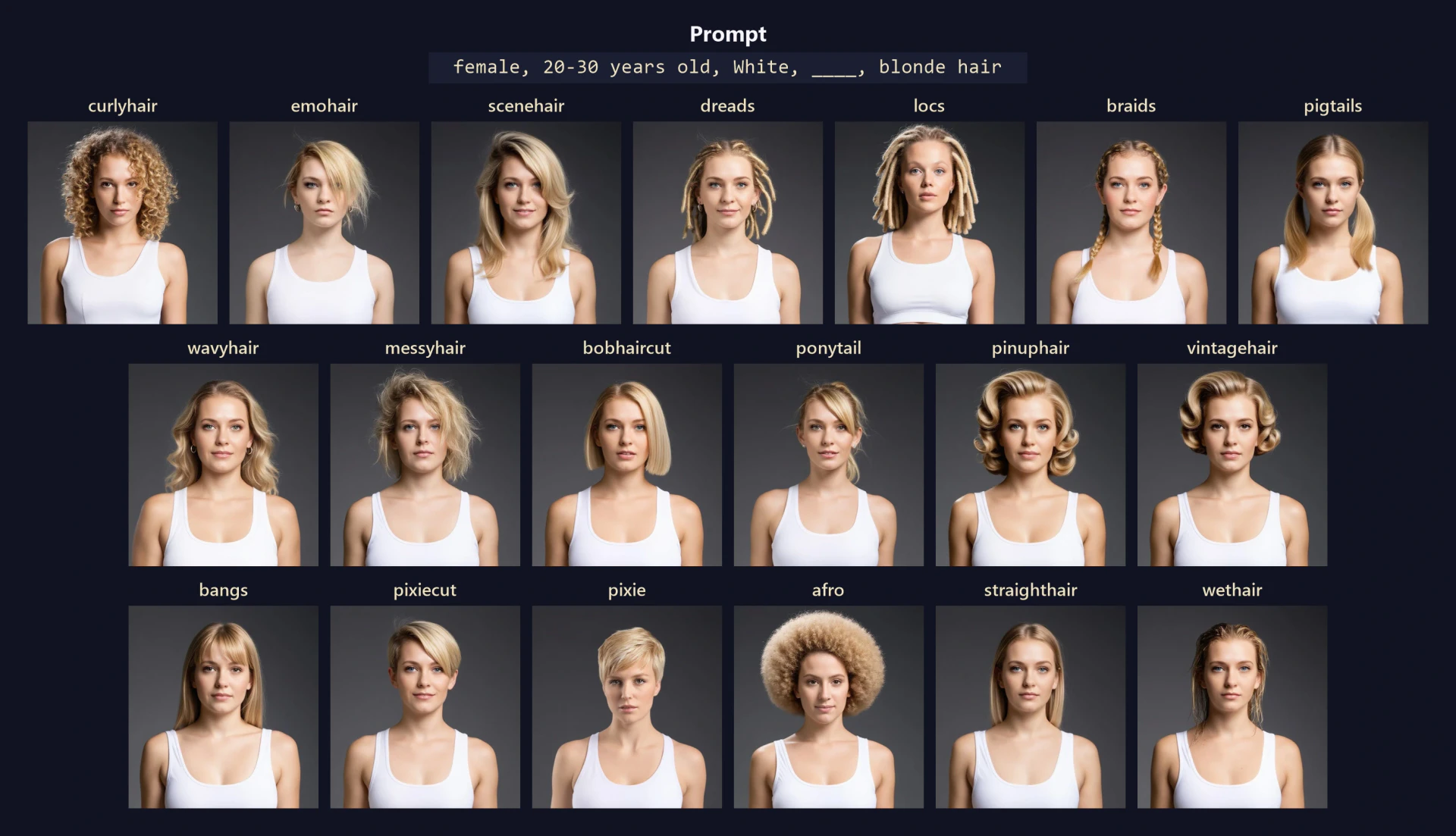
Once you've chosen a hair length, you can add a hairstyle.
Different regions have developed their own popular names and aesthetics for hair styling.
For example:
25-year-old White woman, slim, long beach waves
Or:
25-year-old Japanese woman, petite, long black hair, hime cut
Common descriptions include: curlyhair, emohair (heavy side-swept bangs), scenehair (voluminous, layered hair), dreads, locs, braids, pigtails, wavyhair, messyhair, bobhaircut, ponytail, pinuphair (retro curls or rolls), vintagehair, bangs, pixiecut (very short, cropped haircut), pixie, afro, straighthair, wethair
Hair Color
Hair color can also have a strong influence on your character's visual identity.
Try these tags for natural and fashion hair colors.blackhair, brunette, blonde, platinumblonde, silverhair, whitehair, redhead, ginger, orangehair, pinkhair, purplehair, bluehair, greenhair, rainbowhair.
For example:
25-year-old White woman, curvy, long platinum blonde hair
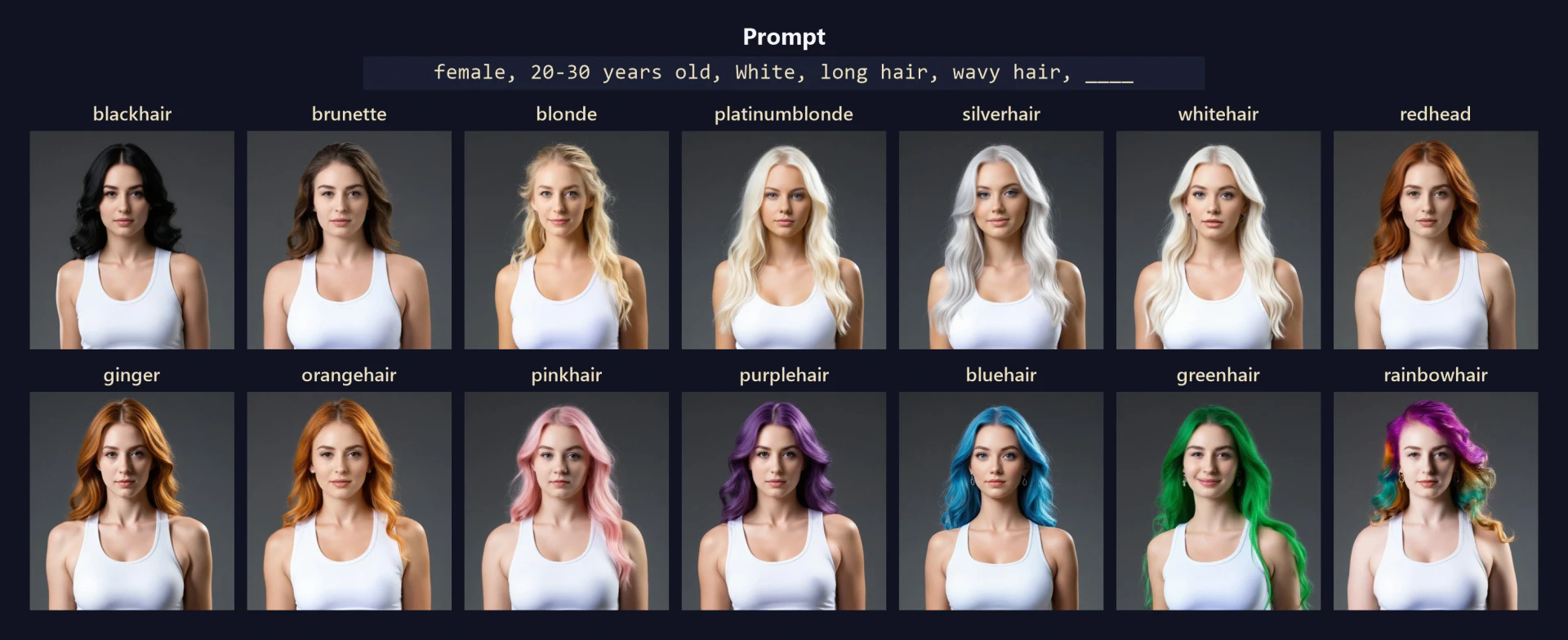
Tip: Combining hair length, hairstyle, and color often gives you more control than using a generic description such as beautiful hair.
For instance:
long, straight black hair with see-through bangs
provides a clearer direction than:
pretty hairstyle
Creating Your Realistic OC
Now that we've explored the essential attributes, let's put everything together.
The easiest way to create your own realistic character is to start with a simple prompt and gradually add more details.
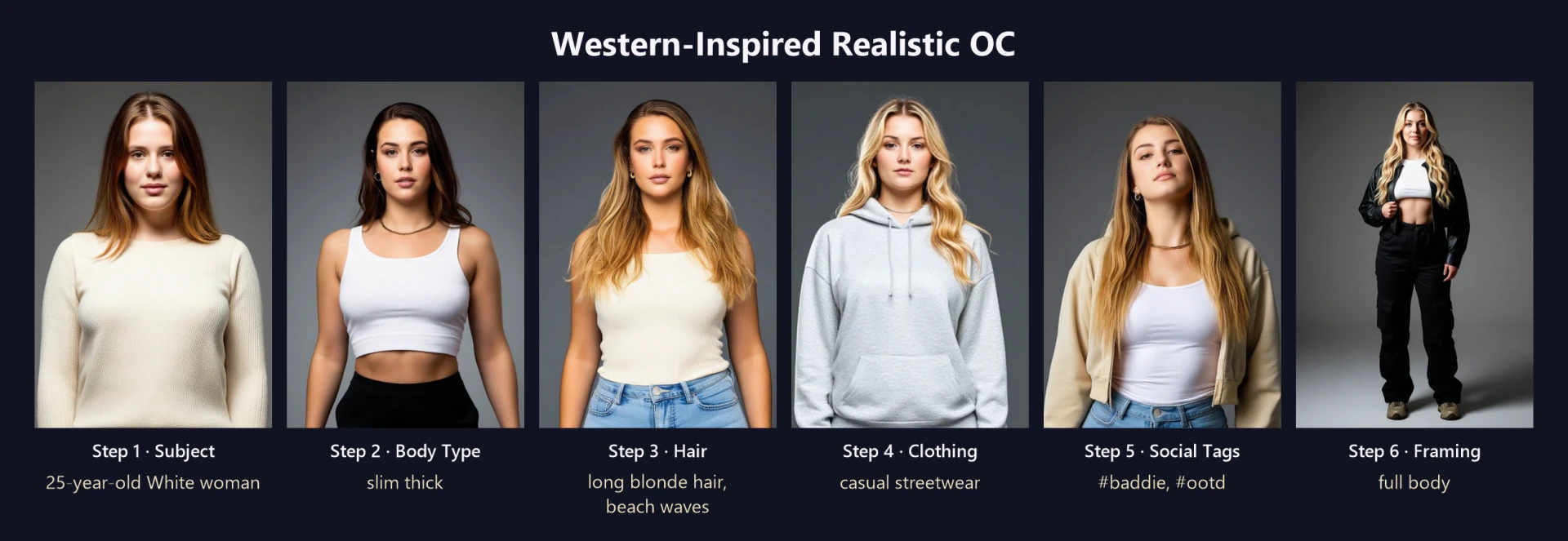
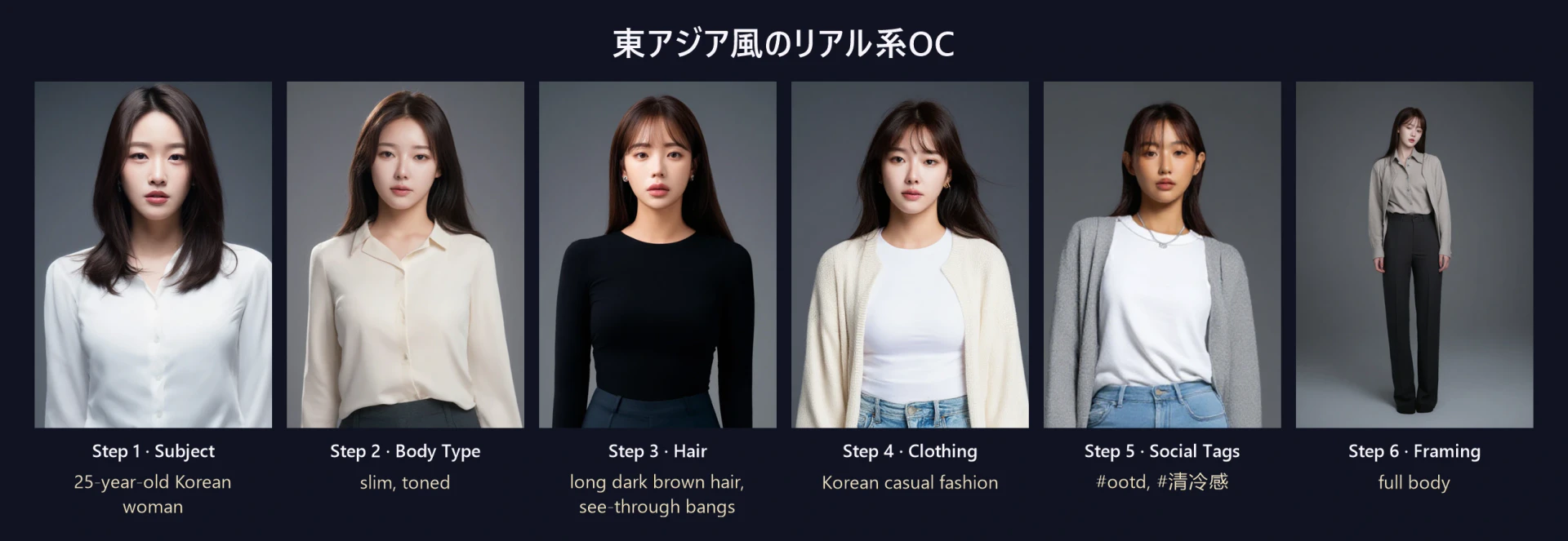
We'll create two example characters: one using Western-inspired style tags and another using East Asian-inspired aesthetics.
Example 1: Western-Inspired Realistic OC
Step 1 — Define the Subject
25-year-old White woman
Step 2 — Add Body Type
25-year-old White woman, slim thick
Step 3 — Customize Hair
25-year-old White woman, slim thick, long blonde hair, beach waves
Step 4 — Choose Clothing
25-year-old White woman, slim thick, long blonde hair, beach waves, casual streetwear
Step 5 — Add Social Media Aesthetics
25-year-old White woman, slim thick, long blonde hair, beach waves, casual streetwear, #baddie, #ootd
Step 6 — Choose Framing
25-year-old White woman, slim thick, long blonde hair, beach waves, casual streetwear, #baddie, #ootd, full body
Example 2: East Asian-Inspired Realistic OC
Step 1 — Define the Subject
25-year-old Korean woman
Step 2 — Add Body Type
25-year-old Korean woman, slim, toned
Step 3 — Customize Hair
25-year-old Korean woman, slim, toned, long dark brown hair, see-through bangs
Step 4 — Choose Clothing
25-year-old Korean woman, slim, toned, long dark brown hair, see-through bangs, Korean casual fashion
Step 5 — Add Social Media Aesthetics
25-year-old Korean woman, slim, toned, long dark brown hair, see-through bangs, Korean casual fashion, #ootd, #清冷感
Step 6 — Choose Framing
25-year-old Korean woman, slim, toned, long dark brown hair, see-through bangs, Korean casual fashion, #ootd, #清冷感, full body
Your Character, Your Imagination
These examples are only starting points.
You can mix Western and East Asian aesthetics, explore different body types, experiment with hairstyles, or combine traditional character descriptions with the social media terms you use every day.
Once you've found a look you like, keep the core character attributes consistent and change only the elements you want to explore.
For stronger visual continuity across multiple images, use character reference or other identity-preserving features when available. Text prompts alone may not preserve an identical face.
The most important thing is to experiment, compare results, and discover which combinations work best for the character you want to create.
Start simple. Add details. Make your OC your own.